
'Market momentum and investor interest are at unprecedented levels, making this the opportune moment.'

Analysts are increasingly optimistic about India's capital markets, with HDFC AMC, CAMS, and KFin Technologies identified as top investment picks. This optimism stems from a structural shift in household savings towards financial instruments and an expected multi-year earnings expansion for market infrastructure providers and asset management companies.

Sebi has proposed allowing depositories to mark such pledged shares as 'non-transferable' for the duration of the lock-in period, based on instructions from the issuer.

India's household debt climbed to 41.3 per cent of gross domestic product (GDP) at the end of March 2025, marking a sustained rise from its five-year average of 38.3 per cent, with consumption-related loans accounting for bulk of the borrowings, the Reserve Bank of India (RBI) said in its Financial Stability Report.

Kannada film actress Ranya Rao is set to be released from Bengaluru Central Jail after a year of detention in a gold smuggling case.

The Powerica Limited IPO opened on March 24, 2026, with muted Day 1 subscription. Check latest GMP, price band, lot size, issue details, and investor response.
Days after an outage at MCX, Sebi chairman Tuhin Kanta Pandey on Tuesday expressed his displeasure over "repeated" instances of breakdowns at exchanges.

Only 2.5 per cent of the equity in Jio Platforms will be offloaded through the OFS route -- meant for secondary share sale.

Financial year 2025-26 (FY26) saw a significant shift in corporate fundraising, with rights issues more than doubling to a multi-decade high of 51, raising 44,290 crore, while qualified institutional placements (QIPs) more than halved to 29 issues, mobilising 62,954 crore, driven by sharp equity market corrections and regulatory changes.

The Securities and Exchange Board of India (Sebi) has granted a no-objection certificate (NOC) to the National Stock Exchange of India (NSE), paving the way for the country's biggest exchange - currently valued at 5 trillion in the unlisted market - to file draft documents for its long-awaited initial public offering (IPO).

Bangladesh Cricket Board chief Aminul Islam will attend the India-Pakistan T20 World Cup clash in Colombo, hoping to resolve tensions with the BCCI following recent disputes.

The Securities and Exchange Board of India (Sebi) has, in principle, agreed to the proposed settlement of the long-pending colocation and dark fibre cases filed by the National Stock Exchange (NSE), Sebi chairman Tuhin Kanta Pandey said on Wednesday.
The Indian IPO market is experiencing a significant surge in preliminary filings, with 38 companies submitting papers to SEBI in March 2026, driven by a combination of improved issuer confidence, strategic regulatory compliance, and private equity investors seeking exits amidst volatile market conditions.

The Clearing Corporation of India (CCIL) will be able to reapply for recognition by the European Union's (EU) financial markets regulator following a pact signed on Tuesday between the Reserve Bank of India (RBI) and the European Securities and Markets Authority (Esma).

In many ways, this is only the beginning -- of a new chapter in India's nuclear story, and of a future where its vast thorium reserves could finally power its ambitions.

HDFC Bank is engaging external legal firms, both domestic and international, to investigate the circumstances surrounding former part-time chairman Atanu Chakraborty's resignation.

'Large firms and their interests can dominate the narrative, even as smaller stakeholders and retail investors struggle to be heard.' 'Regulators therefore require deep subject-matter expertise to assess representations, recognise underlying incentives, incorporate the perspectives of less-visible stakeholders, and guard against bias or capture,' notes Ananth Narayan.

The strained bilateral relations between India and Bangladesh filtered onto the cricket field as captains of the two teams abstained from making customary handshake ahead of their U-19 World Cup Group A match in Bulawayo on Saturday, though the players from both sides were seen exchanging handshakes and pleasantries on the field at the end of the match.
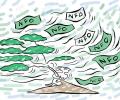
Uncertainty stemming from the US-Iran conflict has significantly impacted India's mutual fund industry, leading to a sharp decline in new fund offers (NFOs) in March, despite numerous regulatory approvals. This geopolitical tension, coupled with existing market strain and distributor hesitation, has dampened investor sentiment and affected overall inflows.
Sebi Chairman Tuhin Kanta Pandey announced intensified surveillance and technology-driven enforcement to combat pre-investment scams targeting retail investors, who are increasingly being lured by fake trading apps and promises of high returns.

We will explore some of the reasons why a stock-only portfolio may no longer be sufficient and some of the modern alternatives and strategies that can help investors build resilient and profitable portfolios.

Following a ban on real-money gaming, Dream Sports, the parent company of Dream11, is strategically expanding its portfolio across 11 companies, including a new venture into wealth management and stockbroking, with a focus on serving a mass user base through AI-first solutions, cofounder Harsh Jain confirmed.

Suryakumar Yadav's strategic emphasis on skill over sledging propelled Team India to a decisive victory against Pakistan in the T20 World Cup, showcasing the power of focus and execution.
India's market regulator has found that Bank of America shared confidential details ahead of a 2024 block trade and later misled regulators during the investigation.

'We are profoundly energy-dependent on the Gulf. That dependency must now be redirected towards the United States, because we require American permission to procure oil.' 'We additionally require Iranian permission to acquire oil from that source. So India now has to seek two separate permissions merely to secure its energy supply.' 'Should we be compelled to source from America, or from Venezuela -- which is, in effect, American-controlled supply -- that will inevitably carry a price premium, an elevated shipping cost, and a considerably extended delivery timeline, given the distances involved.'

Sebi is working with other regulators to expand the CAS framework.

As the government moves to revamp India's securities legislation, unifying three different laws into the Securities Markets Code (SMC), regulatory experts and market insiders have raised concerns on potential funding challenges for the stock market regulator.

After completion of its mandatory tender offer in Fortis Healthcare and Fortis Malar Hospitals, Malaysian health care giant IHH Healthcare is aiming to add 2,000 beds in a bid to double down on value creation in India. IHH, which is Asia's largest multinational private healthcare provider, currently has over 5,000 beds across a combined network of 35 hospitals and 11 states.

Securities and Exchange Board of India (Sebi) Chairman Tuhin Kanta Pandey on Thursday called for sharper disclosures in IPO (initial public offering) offer documents, particularly around risk factors, valuation rationale, objects of the issue, and utilisation of proceeds.
The Supreme Court on Tuesday dismissed an appeal of Reliance Industries Limited and two of its officials against a decision of the Securities Appellate Tribunal, which had upheld a penalty imposed by markets regulator Sebi for not making prompt clarification to stock exchange about the Jio-Facebook deal.

The government has infused over Rs 3,100 crore into women-led startups over the past six years, through its three schemes including the Fund of Funds for Startups (FFS), Startup India Seed Fund Scheme (SISFS), and Credit Guarantee Scheme for Startups (CGSS) to boost female entrepreneurship across the country, according to an update shared by the Ministry of Commerce and Industry.

The average daily turnover (ADTV) in the derivatives market rose to a 12-month high in October, touching 506 trillion - up nearly 46 per cent since June - as volatility picked up and concerns over further regulatory tightening eased. Derivatives activity had slumped earlier this year after the Securities and Exchange Board of India (Sebi) capped weekly expiries to two days and discontinued weekly contracts on non-benchmark indices.

The tribunal granted partial relief to the appellants by modifying Sebi's directions on trading restrictions and account freezes, making them conditional on the deposit of the said amount.

The Mumbai Bench of the National Company Law Tribunal (NCLT) on Tuesday gave its approval to Vedanta Limited's demerger proposal, clearing the way for the group to reorganise its operations into five distinct, sector-specific entities.

Eighteen new-age technology firms went public during the year, a near triple increase from the five firms that debuted in 2023 and 38 per cent more than 2024's tally of 13.

In the mid-1990s, when the shares of listed companies first began to be held in electronic form, they accounted for less than 1 per cent of the stocks bought and sold on the stock exchanges. This climbed to 99.5 per cent by 2001.

While not all complaints are frivolous, experts say petitions timed close to an IPO or listing often raise concerns about mala fide intent.

In November, six primary market issuances accounted for more than 13,000 crore of net equity investments by MFs.
The number of rights issues more than doubled and hit a 28-year high in 2025, even as qualified institutional placements (QIPs) shrank amid a broader market correction and the Securities and Exchange Board of India's (Sebi's) revised framework for rights issues.

The Securities and Exchange Board of India (Sebi) on Wednesday overhauled the cost framework for the 80 trillion domestic mutual fund (MF) industry, introducing a simplified structure aimed at improving transparency for investors while balancing the impact on asset managers.
